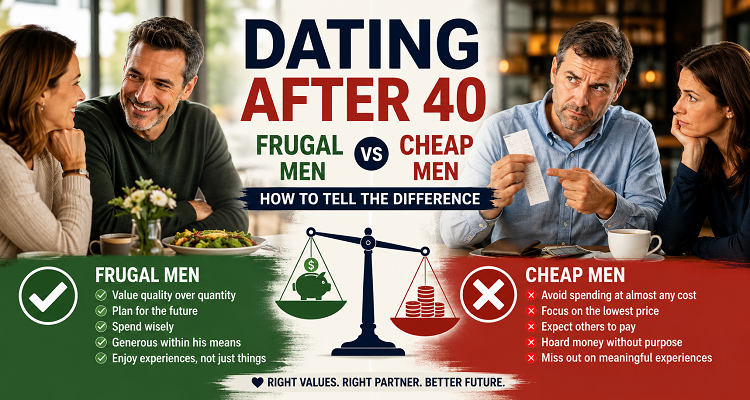
Dating after 40 feels different for most people. It’s not just about attraction anymore. It’s about habits, values, and how two people handle real-life responsibilities. One of the biggest topics that comes up in modern conversations is money behavior in relationships—especially the difference between men who are careful with money and those who simply avoid spending.
At first glance, both can look similar. But over time, the difference becomes very clear in how the relationship feels, grows, and survives everyday life.
Let’s talk about it in a simple, honest way.
Understanding money mindset in dating after 40
By the time people reach their 40s, most have lived through financial ups and downs. Careers are more stable, priorities are clearer, and emotional expectations are deeper. So when dating starts again, financial behavior becomes a big part of compatibility.
This is where terms like Dating After 40 and Relationship Money Habits become important. It’s no longer about who spends more—it’s about who understands balance.
A healthy relationship at this stage is built on shared respect, not financial pressure.
Frugal vs Cheap: the real difference
People often mix up being careful with money and being unwilling to spend. But they are not the same.
A cheap man, on the other hand, avoids spending even when it matters. It’s not about saving wisely—it’s about withholding effort.
This difference shows up in everyday situations:
A frugal man might suggest a budget-friendly restaurant but still make the evening feel special.
A cheap man might complain about any cost, even when it affects the experience.
A frugal man shares financial responsibility in a balanced way.
A cheap man often shifts discomfort onto the partner.
These patterns are important in Frugal Vs Cheap Men discussions because they directly affect emotional comfort in dating.
Why this matters more after 40
In younger dating years, people often overlook financial behavior. But in Modern Dating Over 40, things change.
At this stage, most people want:
- Stability
- Emotional maturity
- Clear intentions
- Respect in financial decisions
Money is no longer just a resource—it reflects values.
A partner’s financial attitude often connects directly to how they handle responsibility, generosity, and respect.
That’s why Mature Dating Advice often emphasizes observation over time rather than quick assumptions.
Signs of financially responsible dating behavior
Healthy financial behavior in relationships doesn’t mean spending large amounts. It means balance and awareness.
A financially responsible partner usually:
- Communicates openly about expectations
- Doesn’t create financial pressure
- Plans dates thoughtfully
- Respects your financial comfort level
- Shares experiences without scorekeeping
This is what defines Financially Responsible Dating and supports long-term trust.
On the other hand, constant reluctance, guilt-tripping over spending, or an imbalance in effort can signal deeper issues.
Emotional impact of money behavior
Money behavior is never just about money. It affects emotional safety.
In Healthy Relationship Boundaries, both partners should feel comfortable expressing needs without fear of judgment or control.
When one partner is overly restrictive or dismissive about spending in shared experiences, it can create:
- Emotional distance
- Frustration
- Unequal effort in the relationship
- Lack of appreciation
This is why Dating Financial Mindset matters just as much as chemistry.
What smart dating choices look like
Smart dating isn’t about finding someone rich or generous in a material sense. It’s about emotional alignment and consistency.
In Smart Dating Choices, people tend to:
- Watch actions over promises
- Notice consistency in small gestures
- Understand long-term patterns
- Avoid rushing financial judgment
- Focus on emotional comfort first
A strong relationship is built when both people feel valued without keeping score.
Older men’s dating behavior patterns
With age, behavior patterns become more defined. Some men become more generous and relaxed, while others become overly cautious or controlling with money.
In Older Men Dating Behavior, you may notice:
- Strong opinions about spending habits
- Preference for traditional roles
- Fixed financial routines
- Comfort or discomfort with shared expenses
None of these are automatically good or bad. What matters is how they align with your own expectations.
Community insights (real experiences shared)
Across dating forums and relationship communities, people often share similar observations:
One user shared:
“He wasn’t broke, but he treated every small expense like a burden. It made everything feel heavy.”
Another shared:
“My partner is careful with money, but never makes me feel guilty for choosing comfort. That difference changed everything.”
And another reflection:
“I realized it’s not about who spends more. It’s about who makes you feel safe when money comes into the picture.”
These experiences highlight how emotional comfort often matters more than the amount spent.
Setting healthy boundaries early
Boundaries are essential in any stage of dating, but especially in Dating After 40.
Healthy boundaries include:
- Talking about expectations early
- Avoiding financial dependency
- Respecting personal spending comfort
- Not accepting guilt-based behavior
When boundaries are clear, misunderstandings reduce significantly.
FAQ
1. How do I tell if someone is frugal or cheap?
Look at patterns, not one-time actions. Frugal people plan and still contribute meaningfully. Cheap behavior feels restrictive and emotionally draining over time.
2. Is being frugal a bad thing in dating?
Not at all. Frugality can be healthy when balanced with generosity and emotional awareness.
3. What matters more—money or mindset?
Mindset. A supportive and respectful financial mindset builds stronger relationships than income alone.
4. Can financial habits change after 40?
Yes, but only if someone is aware and willing. Long-term habits take effort to adjust.
5. How do I avoid financial stress in dating?
Communicate early, set boundaries, and focus on consistency rather than expectations.
Final thoughts
Dating at this stage of life is less about excitement and more about alignment. Financial behavior becomes a mirror of emotional maturity, respect, and shared values. Understanding Frugal Vs Cheap Men helps avoid confusion, but the real goal is deeper than labels. It’s about building something where both people feel secure, respected, and free from financial tension.
In the end, the best relationships aren’t defined by how much is spent—but by how comfortable both people feel showing up as themselves.
That’s what makes Mature Dating Advice so valuable in real life: it brings focus back to clarity, respect, and emotional balance instead of assumptions.
When financial habits align with kindness and consistency, relationships don’t just work—they feel easy.